A Comprehensive List of Characters in Shahnameh
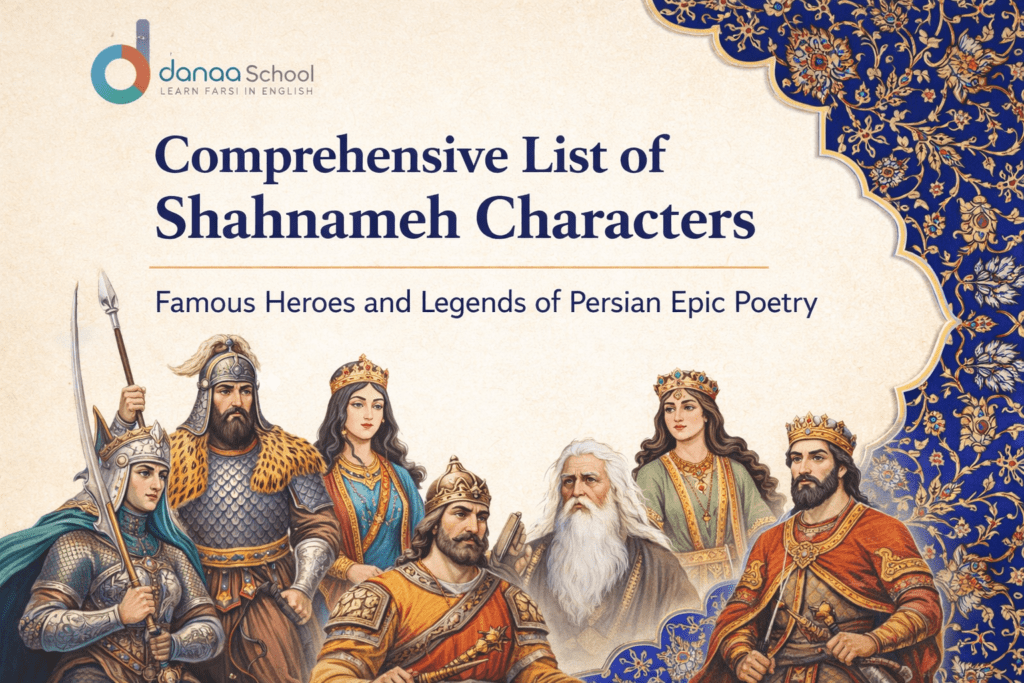
Begin a captivating journey into the heart of Persian literature with Danaa School’s comprehensive overview of the characters in Shahnameh. This monumental epic by Ferdowsi is woven with threads of heroism, love, betrayal, destiny, and moral struggle. Through its rich cast of kings, warriors, sages, and mythical beings, Shahnameh narrates the cultural memory of Iran across centuries.
In this guide, we explore the most influential Shahnameh characters, their roles, and their symbolic importance. Whether you are new to Persian literature or deepening your studies, this overview helps you understand how these legendary figures shape the epic’s timeless narrative.
List of Shahnameh Characters
1. Rostam in Shahnameh
Rostam is the central heroic figure of the Shahnameh, embodying unmatched strength, loyalty, and tragic destiny. His story goes far beyond physical power—Rostam struggles with fate, moral responsibility, and personal loss. Through battles against demons, rival champions, and even his own son Sohrab, Rostam represents the complex nature of heroism in Persian epic tradition.
2. Rostam’s Wife (Tahmineh)
Tahmineh, Rostam’s wife and the mother of Sohrab, plays a deeply emotional and symbolic role in Shahnameh. Her courage in choosing Rostam and her tragic silence regarding Sohrab’s identity shape one of the epic’s most heartbreaking stories. Tahmineh represents love, fate, and the hidden consequences of heroic actions.
3. Sam in Shahnameh
Sam, the father of Zal and grandfather of Rostam, is a figure of wisdom, leadership, and moral authority. His story reflects themes of redemption and responsibility, especially in his acceptance of Zal. Sam’s presence connects generations of heroes and reinforces the importance of legacy and ethical leadership in Shahnameh.
4. Fereydoon Shah in Shahnameh
Fereydoon Shah is a legendary king known for overthrowing tyranny and restoring justice. His reign symbolizes balance, wisdom, and the moral duty of rulers. The division of his kingdom among his sons introduces themes of jealousy, power, and political consequence that echo throughout Shahnameh.
Shahnameh Names and Their Meaning
Names in Shahnameh are never accidental. Each name carries symbolic, cultural, and historical meaning that reflects the character’s destiny and role. Understanding Shahnameh names provides deeper insight into the values and worldview embedded in Persian epic storytelling.
The Demon King in Shahnameh
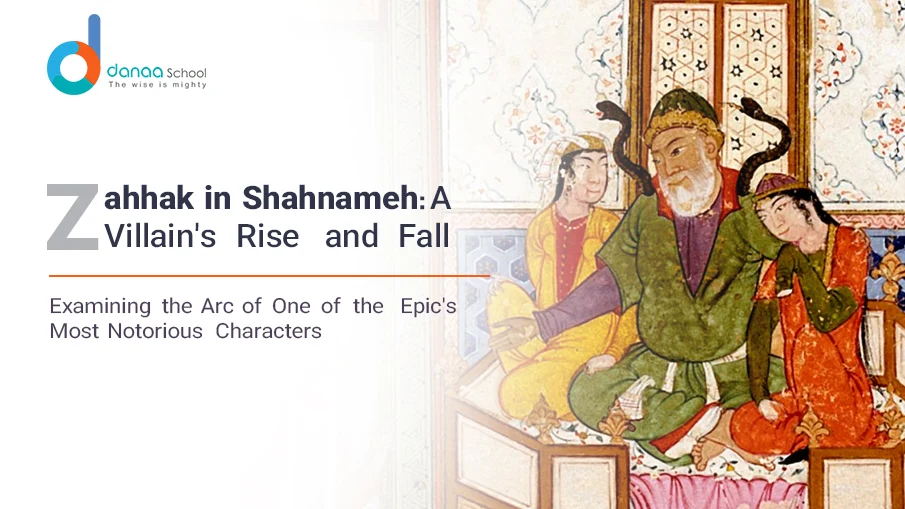
Demonic figures in Shahnameh represent chaos, tyranny, and moral corruption. These antagonists challenge heroes not only physically but ethically. Battles against demon kings illustrate the eternal struggle between order and disorder, wisdom and ignorance, light and darkness.
Other Important Names from Shahnameh
Beyond the most famous heroes and kings, Shahnameh features countless influential characters—princes, warriors, advisors, and mythical beings. Each contributes a unique perspective to the epic’s moral and historical landscape, forming a richly layered narrative.
Shahnameh Family Tree
Family lineage plays a crucial role in Shahnameh. Understanding the family tree helps readers follow inherited conflicts, alliances, and destinies. From Fereydoon’s sons to Rostam and Sohrab, genealogy shapes the tragic and heroic arcs of the epic.
Frequently Asked Questions (FAQs)
Who is the most important character in Shahnameh?
Rostam is widely considered the central hero of Shahnameh due to his recurring role, moral complexity, and influence on the epic’s major events.
Are there female characters in Shahnameh?
Yes. Characters such as Tahmineh, Gordafarid, and Rudabeh play critical roles, representing courage, intelligence, and emotional depth.
Is Shahnameh based on history or mythology?
Shahnameh blends mythology, heroic legend, and historical memory, creating a cultural narrative rather than a strictly historical account.
Why is Shahnameh important in Persian culture?
Shahnameh preserves Persian identity, language, and moral values, making it one of the most important works in Iranian cultural history.
What is Shahnameh, and why is it considered a literary masterpiece?
Shahnameh is an epic poem by the Persian poet Ferdowsi that celebrates Iran’s mythical and historical past. It is considered a literary masterpiece due to its rich narrative, profound themes, and cultural significance, making it a cornerstone of Persian literature.
Who is Rostam, and why is he a central figure in Shahnameh?
Rostam is a legendary Shahnameh hero known for his extraordinary strength and courage. As a central figure, Rostam’s character embodies the heroic archetype, and his epic adventures contribute significantly to the overall narrative, making him a symbol of virtue and valor.
What insights can we gain from exploring the family tree in Shahnameh?
The Shahnameh family tree provides insights into the interconnected lives of the characters, showcasing relationships, alliances, and conflicts. It adds depth to the narrative, emphasizing the impact of lineage on the unfolding saga and highlighting familial dynamics within the epic.
How do names play a significant role in Shahnameh, and what cultural nuances do they carry?
Names in Shahnameh carry cultural and historical weight, contributing to the narrative’s richness. Exploring the significance of names reveals the symbolism and cultural nuances embedded in each, giving readers a deeper appreciation of the characters and their stories.
Who is the demon king in Shahnameh, and what role does he play in the narrative?
The demon king is a formidable antagonist in Shahnameh, representing darkness and adversity. Exploring this character unveils symbolism and challenges the hero faces in overcoming the antagonist, adding complexity to the epic’s intricate dance between light and shadow.
How does Danaa School's exploration of Shahnameh enhance the understanding of Persian literature?
Danaa School’s exploration of Shahnameh delves into the depths of characters, their tales, and the cultural richness within the epic. This enhances understanding by providing a comprehensive analysis, offering readers a nuanced perspective, and fostering a deeper appreciation for Persian literature.
Why should one enroll in Danaa School's Shahnameh classes?
Enrolling in Danaa School’s Shahnameh classes offers a unique opportunity to explore the nuances of this epic tale with expert guidance. Whether you’re a seasoned literature enthusiast or a beginner, the classes provide a structured and educational adventure, enhancing your understanding of Persian literature and the captivating characters within Shahnameh.
Conclusion
As we wrap up this comprehensive exploration, Danaa School invites readers to fully immerse themselves in the captivating epic of Shahnameh. Through our in-depth analysis of characters and their tales, we aim to ignite a profound appreciation for this literary masterpiece’s timeless beauty and cultural significance. Join us in celebrating the enduring legacy of Shahnameh and the captivating characters that continue to resonate across generations.
Whether you’re a seasoned literature enthusiast or just beginning your journey, our classes offer a unique opportunity to explore the nuances of Shahnameh, its legendary characters, and the cultural richness embedded in each page. Don’t miss out on this chance to enhance your understanding of Persian literature – enroll now and start an educational adventure with Danaa School!