Search 250+ terms (Banking, Trade, Legal)
| English | Farsi (فارسی) | Pronunciation |
|---|
The Ultimate Guide to Business Farsi: Essential Terminology for Professionals
In today's interconnected global economy, the ability to communicate in the local language is a massive strategic asset. For entrepreneurs, investors, and diplomats looking to engage with markets in Iran, Afghanistan, or Tajikistan, mastering Business Farsi (Persian) is not just a polite gesture—it is a competitive advantage.
While standard Farsi courses teach you everyday survival skills like buying groceries or hailing a taxi, the boardroom requires a completely different vocabulary. Business Persian is more formal, relies heavily on Arabic loanwords, and is wrapped in complex layers of cultural etiquette.
This comprehensive guide, paired with our free Business Dictionary Tool above, covers the essential terminology for contracts, negotiations, banking, corporate management, and formal correspondence.

1. The Art of Negotiation & "Taarof"
Before you even open a spreadsheet, you must understand "Taarof" (تعارف). In a western business context, "Yes" usually means "Yes". In Persian culture, a supplier might initially refuse payment ("Ghabeli nadare" - It's not worthy of you) or a partner might reject a seat at the head of the table. As a professional, you must understand that this is a ritual of politeness, not a literal free offer.
Key Phrases for Meetings
- "Khasteh nabashid" (خسته نباشید): Literally "Don't be tired." Use this when entering an office or ending a meeting. It acknowledges their hard work and is the most common professional greeting.
- "Az didan-e shoma khoshhalam" (از دیدن شما خوشحالم): I am pleased to meet you (Formal).
- "Lotfan benevisid" (لطفاً بنویسید): Please write it down. (Crucial during negotiations to avoid misunderstandings).
- "Nazar-e shoma chist?" (نظر شما چیست؟): What is your opinion? (Showing respect for hierarchy).
2. Banking, Finance, and the "Rial vs. Toman" Trap
Financial discussions in Iran have a unique challenge: the dual currency unit system. While the official currency is the Rial (used in banking apps, official contracts, and government documents), everyone speaks in Toman.
- 1 Toman = 10 Rials.
- Always clarify: "Manzoor-etan Toman ast ya Rial?" (Do you mean Toman or Rial?)
Essential Finance Vocabulary
- Hesab-e Banki (حساب بانکی): Bank Account.
- Shomareh Sheba (شماره شبا): IBAN (International Bank Account Number). You will need this for any transfer.
- Vam (وام): Loan.
- Sood (سود): Profit. Note: "Bahreh" is often used for bank interest rates.
- Zarar (ضرر): Loss.
- Nerkh-e Arz (نرخ ارز): Currency Exchange Rate. Since rates fluctuate, checking the "Nerkh-e Rooz" (Rate of the day) is common.
- Maliyat (مالیات): Tax. (Maliyat bar arzesh afzudeh = VAT).
3. Legal Contracts & Formal Agreements
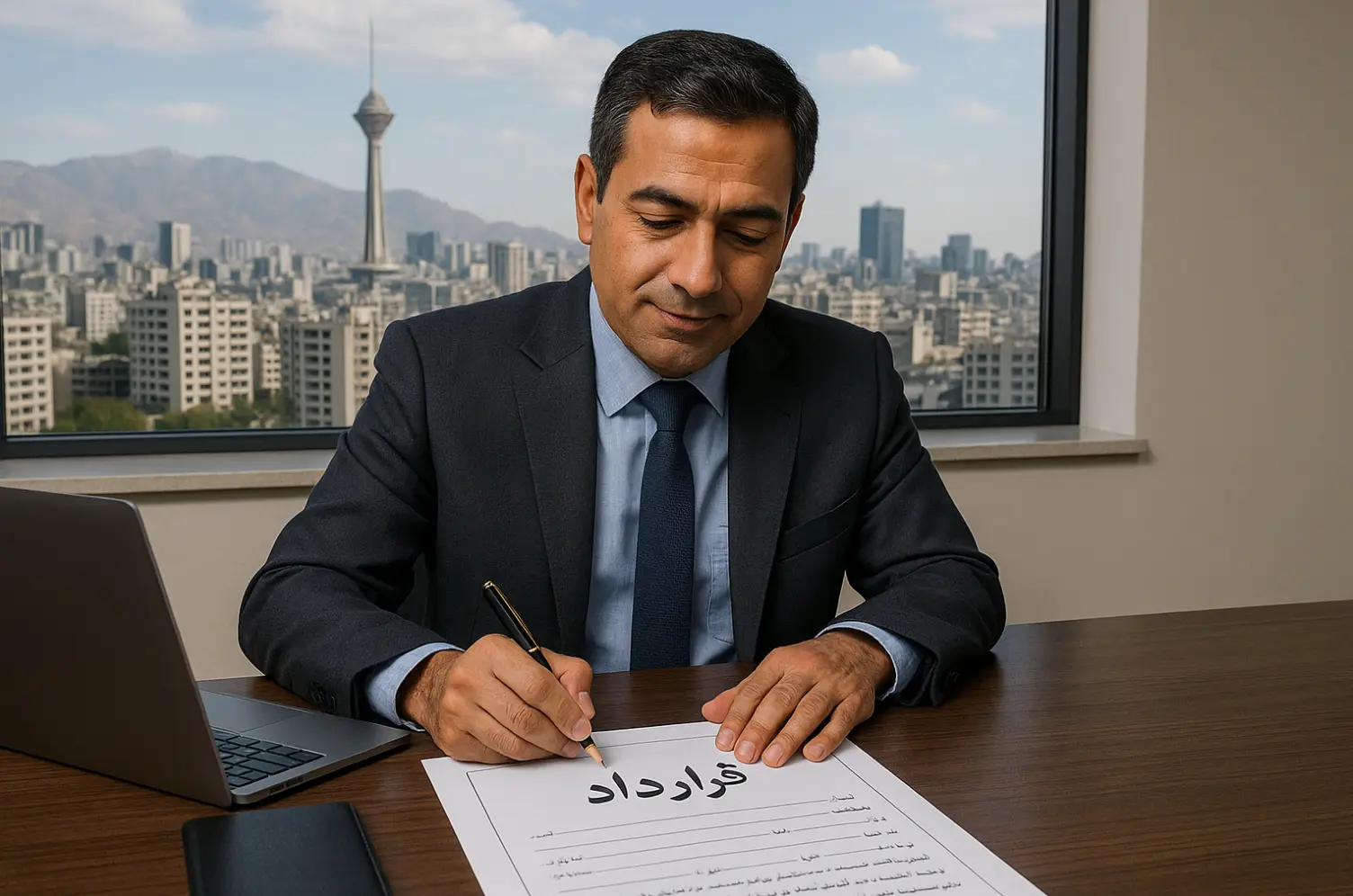
Never sign what you don't understand. Legal Farsi (Zaban-e Hoghooghi) uses many Arabic loanwords and passive sentence structures that can be confusing even for native speakers.
Contract Structure
- Gharardad (قرارداد): The Contract itself.
- Tarafeyn (طرفین): The Parties (Buyer and Seller).
- Mowzoo-e Gharardad (موضوع قرارداد): Subject of the contract.
- Moddat (مدت): Duration/Term.
- Mablagh (مبلغ): Amount/Price.
- Faskh (فسخ): Termination/Cancellation clause.
- Force Majeure (فورس ماژور): Used exactly as in English/French.
Pro Tip: Setting a contract deadline? Use our Persian Date Converter to ensure the Solar Hijri dates match your Gregorian calendar.
4. Export, Import, and Logistics (Bazargani)
For traders dealing with customs (Gomrok), knowing the logistics terminology is vital to avoid delays at the border.
- Saderat (صادرات): Exports.
- Varedat (واردات): Imports.
- Gomrok (گمرک): Customs.
- Tarifeh (تعرفه): Tariff.
- Hamlo Naghl (حمل و نقل): Transportation/Logistics.
- Bimeh-nameh (بیمهنامه): Insurance Policy.
- Tarkhis-kar (ترخیصکار): Customs Broker (The person who clears your goods).
5. Writing Formal Business Emails
Email etiquette in Farsi is far more formal than in English. You cannot simply say "Hi [Name]".
Opening:
- "Ba salam va ehteram" (With greetings and respect).
- "Janab-e Aghaye..." (Dear Mr...) / "Sarkar-e Khanom-e..." (Dear Ms...).
Closing:
- "Ba tashakor" (With thanks).
- "Ba sepas" (With gratitude - more formal).
- "Eradatmand" (Yours sincerely - literally "Your devotee", very polite).
6. Job Titles and Hierarchy
Iran has a hierarchical business culture. Addressing senior management correctly is critical.
- Modir-e Aamel (مدیر عامل): CEO / Managing Director.
- Raees-e Heyat Modireh (رئیس هیات مدیره): Chairman of the Board.
- Modir-e Forosh (مدیر فروش): Sales Manager.
- Karmand (کارمند): Employee.
- Vakil (وکیل): Lawyer.
Accelerate Your Career with Danaa School
We offer specialized Business Farsi courses designed for executives and entrepreneurs.
Learn Farsi Online