


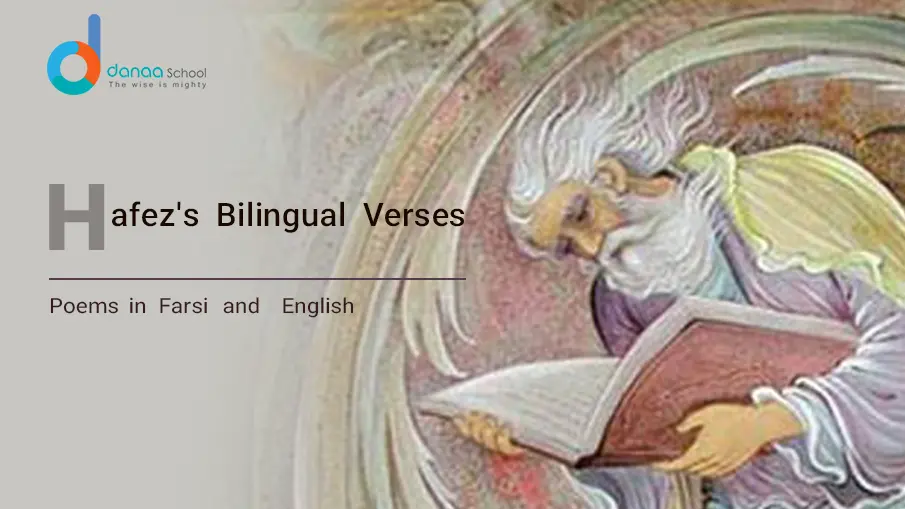
Hafez’s Poems in Farsi and English
Hafez’s poetry has enchanted readers for centuries, weaving a rich tapestry of love, mysticism, and wisdom that transcends time and cultural boundaries. Renowned as one of Persia’s most influential poets, Hafez’s verses remain deeply rooted in Iranian culture while continuing to inspire readers worldwide.
This article offers a glimpse into the captivating world of Hafez, presenting selected poems in both Farsi and English translation. Whether you are a long-time admirer or new to Persian literature, these poems reveal the enduring beauty and depth of Hafez’s words. You will also discover how Danaa School can help you explore Persian language and poetry more deeply.
Who Was Hafez?
Khwāja Shams-ud-Dīn Muḥammad Ḥāfeẓ-e Shīrāzī , known simply as Hafez, was a 14th-century Persian poet born in Shiraz, Iran. His poetry is celebrated for its lyrical elegance, layered symbolism, and deep insight into human emotion and spiritual longing. Hafez’s influence extends far beyond Persian literature, inspiring thinkers and poets from Goethe to Nietzsche.
The Significance of Hafez’s Poetry
Hafez’s poems, primarily written in the ghazal form, blend love, spirituality, and existential reflection. His mastery of language allows him to express profound philosophical ideas through musical and emotionally rich verse. Each poem invites contemplation, offering insight into both the inner life of the soul and the wider human condition.
Selected Poems by Hafez
Below is a small selection of Hafez’s poems, presented in the original Farsi alongside English translations. These examples highlight his extraordinary ability to capture longing, devotion, and beauty.
The Best Hafez Poems: Exploring the Timeless Poetry of Hafez
1. Ghazal: The Dance of Life
عاشق شدم که یار من آن یار من شود
وز من هر آنکه آن نشود یار، بر سر است
تا کی کشم عذاب و نبینم زِ وصل خواب؟
راهی نباشد از من و او جز که سر به سر
I fell in love so that my beloved would become mine,
And whoever does not become my beloved remains in grief.
How long must I endure this pain without dreaming of union?
There is no path between us but complete surrender.
2. Ghazal: A Vision of Roses
دیدم به خواب خوش که به دستم پیاله بود
تعبیر رفت و کار به دولت حواله بود
I saw in a sweet dream a goblet in my hand,
Its meaning passed, and fortune took command.
3. Ghazal: In Search of the Beloved
دل میرود ز دستم صاحبدلان خدا را
دردا که راز پنهان خواهد شد آشکارا
My heart slips away—O hearts of wisdom, God knows,
Alas, the hidden secret will soon be disclosed.
The Art of Translation
Translating Hafez is a delicate and complex task. His poetry is dense with metaphor, symbolism, and cultural nuance. A successful translation seeks not only to convey literal meaning but also to preserve emotional resonance and spiritual depth. Each translation becomes an interpretation, offering readers a new doorway into Hafez’s world.
Embrace Persian Language and Culture with Danaa School
At Danaa School, we believe language is the gateway to culture. Our Persian language and literature programs guide learners from beginner to advanced levels, using classical poetry—especially Hafez—as a bridge to deeper cultural understanding. Studying Hafez not only strengthens your Farsi skills but also connects you to centuries of Persian thought and artistic expression.
FAQs
Why is Hafez’s poetry still relevant today?
Hafez’s poetry addresses universal themes of love, spirituality, and human nature, making it timeless and relatable across generations.
How can I start reading Hafez’s poetry?
Begin with bilingual editions that offer both the Farsi and English translations. Reading alongside a guide or taking a class on Persian literature can also enhance your understanding.
What is a ghazal?
A ghazal is a form of Persian poetry characterized by rhyming couplets and a refrain, typically expressing themes of love and mysticism.
How can Danaa School help me learn more about Persian literature?
Danaa School offers Persian language courses that include explorations of Persian literature, including the works of Hafez. Our classes are designed to provide both language skills and cultural insights.
Conclusion
Hafez’s poetry offers a timeless window into the soul, weaving intricate narratives of love, loss, and spiritual longing. His words continue to resonate, bridging the gap between past and present, East and West. At Danaa School, we’re committed to helping you explore and appreciate the richness of Persian language and culture. Enroll in our courses today and immerse yourself in the lyrical beauty of Hafez’s verses.

2 Responses
What is Farsi? You are supposed to be a language school and yet you don’t know the difference between endonyms and exonyms! Farsi is the Persian for Persian. Persian is the correct word. You don’t call German language “Deutsch” because Germans call it Deutsch. What you are doing is erasing hundreds of years of culture and history associated with the word Persian.
Dear Kamyar,
Thank you for your insightful comment. While “Farsi” is the endonym, “Persian” is the historically rich term that is internationally recognized and respected.
We understand that not everyone might be familiar with the distinction between endonyms and exonyms, much like how some might not know that “Deutsch” is the German term for German. However, the terms “Farsi” and “Persian” are generally understood to refer to the same language, both within Iran and globally. The interchangeable use of these terms helps ensure that our content reaches a broader audience and remains accessible.
We truly appreciate your feedback and will strive to respect the cultural and historical significance of the term “Persian” in our future communications.