How Persian and Urdu Are Related
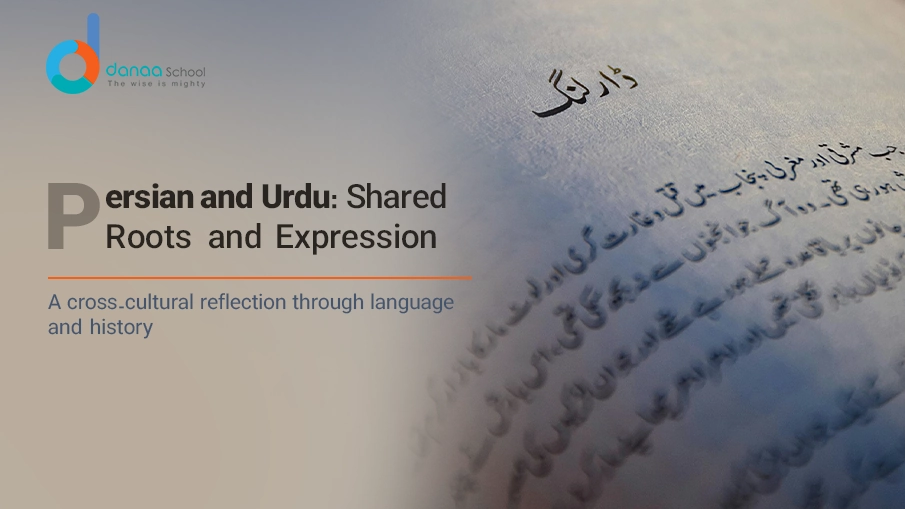
Persian and Urdu share a long and deeply intertwined history shaped by cultural, political, and literary exchanges. Persian once served as the language of administration and high culture across the Indian subcontinent, leaving a lasting imprint on Urdu.
This article explores the historical connection between Persian and Urdu and explains how Persian continues to influence Urdu today.
Historical Connection Between Persian and Urdu
Persian played a central role in the development of Urdu, particularly during the Mughal Empire (1526–1857). For several centuries, Persian was the official language of administration, education, and literature in the Indian subcontinent.
Only in the 19th century did Urdu gradually replace Persian as the dominant language in northern India.
Key Historical Influences
- The Mughal emperors promoted Persian as the language of governance and scholarship
- Persian poets and scholars migrated to the subcontinent
- Persian vocabulary and literary styles became embedded in emerging Urdu
Shared Vocabulary and Loanwords
Urdu has borrowed extensively from Persian, and many Persian-origin words are still used in everyday Urdu conversation.
| English | Persian | Urdu |
| Book | کتاب (Ketâb) | کتاب (Kitâb) |
| Friend | دوست (Doost) | دوست (Doost) |
| Garden | باغ (Bâgh) | باغ (Bâgh) |
| Color | رنگ (Rang) | رنگ (Rang) |
Although Urdu has also borrowed from Arabic and Turkish, Persian remains its strongest linguistic influence.
Persian Influence on Urdu Poetry and Literature
Urdu poetry and literature are profoundly shaped by Persian traditions. Classical Persian poetic forms and imagery became foundational elements of Urdu literary expression.
Many influential Urdu poets, including Mir Taqi Mir, Ghalib, and Allama Iqbal, were fluent in Persian and deeply inspired by Persian poetry.
Shared Literary Features
- Use of Persian poetic forms such as ghazal and qasida
- Recurring Persian imagery like roses and nightingales
- Incorporation of Persian couplets into Urdu poetry
Differences Between Persian and Urdu
Despite their close relationship, Persian and Urdu differ in grammar, pronunciation, and linguistic structure.
Key Differences
- Grammar: Urdu grammar is influenced by Hindi, while Persian follows Indo-Iranian structures
- Script: Urdu uses a modified Persian-Arabic script with additional letters
- Pronunciation: Persian has softer consonants and distinct vowel patterns
The Role of Persian in Modern Urdu
Although Persian is no longer widely spoken in the subcontinent, its influence on Urdu remains strong.
- Persian phrases appear in religious and academic Urdu texts
- Formal Urdu speech contains many Persian-origin words
- Persian continues to be studied by Urdu scholars and poets
Conclusion
Persian and Urdu share a rich linguistic and cultural heritage. Persian has deeply shaped Urdu vocabulary, poetry, and literary identity. While Urdu has evolved into a distinct language, its Persian roots remain unmistakable.
Learn Persian with Danaa School
If you want to better understand Urdu through its Persian roots, Danaa School offers expert-led Persian courses connecting language, culture, and history.
Frequently Asked Questions
- How did Persian influence Urdu? Persian shaped Urdu through administration, poetry, and education during the Mughal era.
- Are Persian and Urdu mutually intelligible? No, but they share extensive vocabulary and literary traditions.
- Why does Urdu contain many Persian words? Urdu developed under strong Persian cultural influence.
- Is Persian still studied in South Asia? Yes, mainly in academic and religious contexts.
- Which Urdu poets were influenced by Persian? Ghalib, Mir Taqi Mir, and Allama Iqbal.
- How much of Urdu vocabulary comes from Persian? Estimates suggest up to 70%.
- Where can I learn Persian? At Danaa School, through structured online courses.