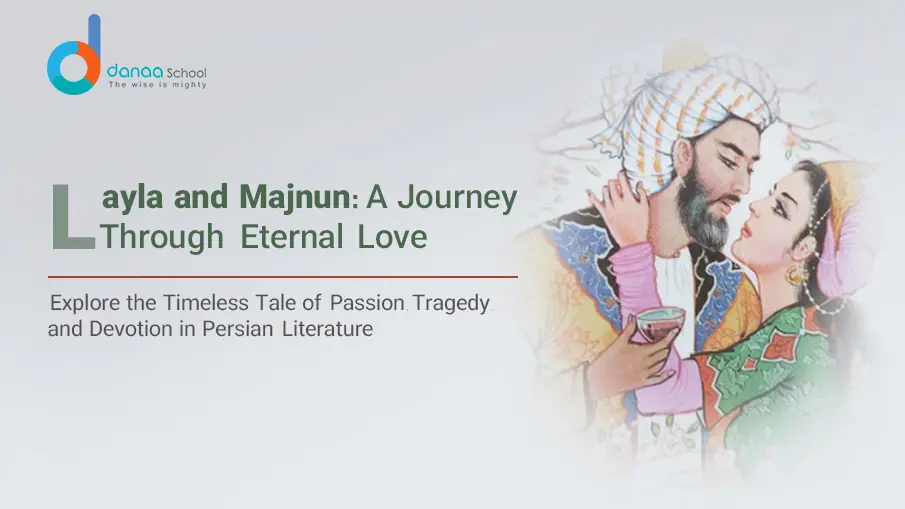
Layla and Majnun: A Timeless Masterpiece of Persian Literature
Layla and Majnun is one of the most enduring love stories in world literature, a tale of passion, longing, and spiritual transcendence that has captivated readers for centuries. Rooted deeply in Persian literary tradition, this poetic narrative goes far beyond a simple romance. It explores the nature of love itself—earthly and divine—and reflects profound insights into the human condition.
Introduction to Layla and Majnun
At its heart, Layla and Majnun is a story of two lovers whose bond defies social conventions, reason, and even sanity. The poem presents love not as possession, but as devotion, sacrifice, and transformation. Through lyrical language and symbolic imagery, the narrative speaks to universal emotions that resonate across cultures and generations.
The Origins of the Story
The origins of Layla and Majnun trace back to 7th-century Arabia, where the tale circulated as an oral legend. However, it was the Persian poet [Nizami Ganjavi](chatgpt://generic-entity?number=0) who immortalized the story in literary form during the 12th century. His poetic rendition elevated the legend into one of the greatest works of Persian literature.
Nizami’s version draws heavily on Sufi philosophy and mystical symbolism, transforming a tragic love story into an allegory of the soul’s yearning for union with the divine. Through this lens, Majnun’s madness becomes spiritual enlightenment, and Layla represents absolute beauty and truth.
Historical Context and Literary Significance
Understanding Layla and Majnun requires awareness of the cultural and historical environment in which it was written. Medieval Persian society was governed by strict social norms, tribal loyalties, and honor codes. Love that defied these structures was seen as dangerous and disruptive.
Nizami masterfully weaves these social constraints into the narrative, presenting love as both a source of suffering and a path to transcendence. His influence extended far beyond his own era, shaping Persian, Ottoman, and Indo-Persian literary traditions for centuries.
Summary of the Plot
The story centers on Qays, later known as Majnun—meaning “the mad one”—and Layla, his childhood love. Their intense affection is discovered and condemned by society, preventing their union. Forced apart, Layla is married to another man, while Majnun retreats into the desert, consumed by love and despair.
Majnun’s isolation and madness are portrayed not merely as tragedy, but as a spiritual awakening. His love becomes absolute, detached from physical desire and focused entirely on the essence of Layla. The story concludes with separation in the physical world, yet hints at spiritual union beyond death.
Central Themes of Layla and Majnun
One of the defining strengths of Layla and Majnun is its rich thematic depth. Love is the central theme, but it is explored in multiple dimensions: romantic, obsessive, spiritual, and transcendental.
Madness functions as a metaphor for divine awareness, while fate and destiny highlight humanity’s limited control over life. The poem also reflects on suffering as a necessary stage in spiritual transformation, a key concept in Sufi thought.
Character Analysis
Layla is portrayed as the embodiment of ideal beauty and unattainable perfection. Though physically constrained by society, she exists as a powerful spiritual presence in Majnun’s inner world.
Majnun, in contrast, represents the seeker who abandons social identity, comfort, and reason in pursuit of absolute love. His transformation from a rational youth into a wandering ascetic symbolizes the dissolution of the ego—a recurring theme in Persian mystical literature.
Cultural Impact and Legacy
The influence of Layla and Majnun extends far beyond Persian literature. The story has inspired poetry, miniature paintings, operas, ballets, and films across the Middle East, Central Asia, and South Asia.
Its narrative has been reinterpreted in countless cultural contexts, yet its emotional and philosophical core remains unchanged. The tale continues to serve as a universal symbol of love that transcends time, place, and form.
Layla and Majnun in Persian Literary Tradition
Within Persian literature, Layla and Majnun stands alongside other monumental works that blend poetry, philosophy, and spirituality. Its influence is evident in later poets such as Hafez and Rumi, who similarly explored love as a path toward divine truth.
Studying this poem provides invaluable insight into the symbolic language and emotional depth that define Persian poetry.
Why Study Layla and Majnun at Danaa School?
At [Danaa School](chatgpt://generic-entity?number=1), students explore Layla and Majnun not only as a literary text but as a cultural and philosophical masterpiece. Courses are designed to help learners understand historical context, poetic language, symbolism, and emotional nuance.
Through guided reading, discussion, and language analysis, students deepen both their Persian proficiency and their appreciation of classical literature.
Conclusion
Layla and Majnun remains a timeless testament to the power of love, sacrifice, and spiritual longing. Its enduring relevance lies in its ability to speak to the deepest human emotions while offering a vision of transcendence beyond worldly limitations.
Discover the beauty of Persian literature and explore this legendary love story in its original cultural context. Learn Farsi with Danaa School and experience Layla and Majnun as it was meant to be read.