Is GCSE Persian Easy? What Students and Parents Should Know
One of the most common questions parents and students ask is: “Is GCSE Persian easy?”
At first glance, the answer may seem obvious — especially for students who speak Persian at home. However, GCSE Persian (also known as GCSE Farsi) is not a speaking test alone. It is an academic exam with clear expectations, formal writing requirements, and strict marking criteria.
What Does GCSE Persian Actually Test?
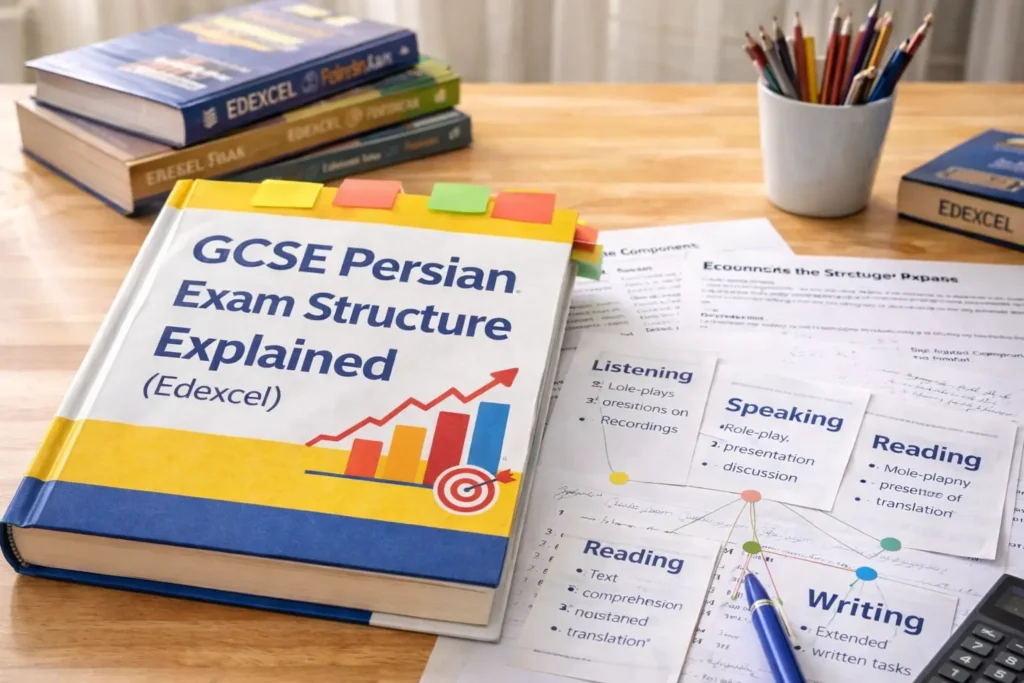
The Edexcel GCSE Persian exam assesses four core language skills. Each skill contributes equally to the final grade.
- Listening
- Speaking
- Reading
- Writing
This means that strong speaking ability alone is not enough to guarantee a high grade.
Is GCSE Persian Easy for Native Speakers?
For students who grew up speaking Persian at home, GCSE Persian is often easier at the listening and speaking level. Vocabulary recognition and pronunciation usually come naturally.
However, many native speakers underperform because of weaknesses in writing and translation.
Common challenges for native speakers
- Using informal or spoken Persian instead of formal written language
- Frequent spelling and orthography mistakes
- Weak paragraph structure in extended writing tasks
- Word-for-word translation rather than meaning-based translation
As a result, students who expect a top grade sometimes receive a mid-range result.
Is GCSE Persian Difficult for Non-Native Speakers?
For students who learn Persian as a second or third language, GCSE Persian can be challenging — but it is not unrealistic with the right preparation.
Success depends on focusing on exam-specific language, recurring topics, and structured responses rather than casual conversation.
Which Parts of GCSE Persian Are the Most Difficult?
Writing
Writing is the most common area where marks are lost. Examiners expect accuracy, formal language, and clear structure.
Translation
Translation tasks require precision and control of both languages. Many students struggle by translating word-for-word instead of conveying meaning.
Listening
Listening can be challenging due to speed and unfamiliar phrasing, especially if students are not used to exam-style recordings.
Why Do Some Students Find GCSE Persian Harder Than Expected?
- Underestimating the academic nature of the exam
- Starting preparation too late
- Lack of familiarity with Edexcel exam format
- Limited practice in formal writing
GCSE Persian rewards preparation and structure, not just fluency.
So, Is GCSE Persian Easy or Not?
The honest answer is:
- Without preparation: No, it is not easy.
- With exam-focused preparation: Yes, it is manageable.
- With structured guidance: It can become one of the strongest GCSE results.
How to Prepare for GCSE Persian Effectively
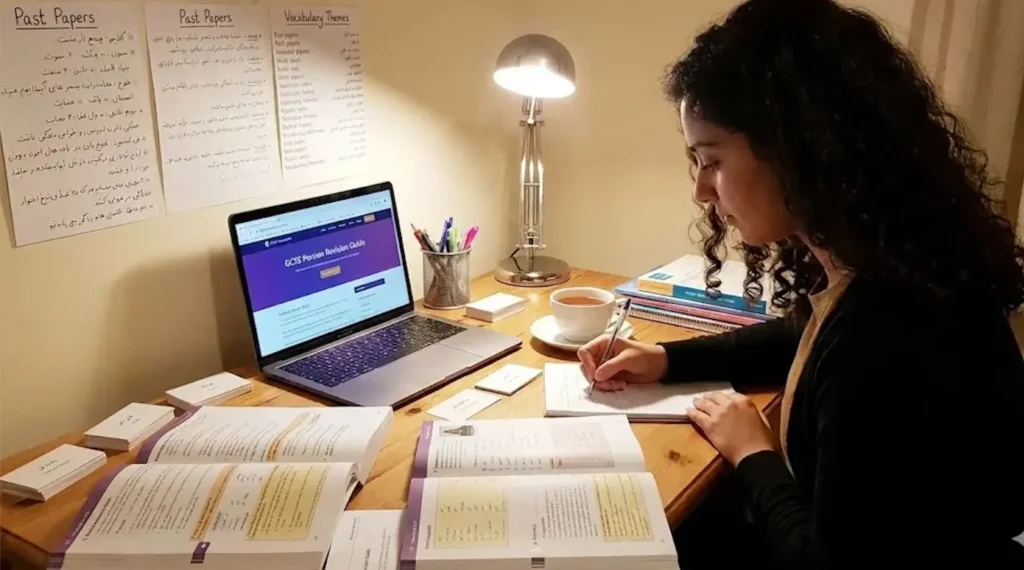
Effective preparation focuses on understanding the exam structure, practising writing regularly, and learning how marks are awarded. Students benefit most when preparation is systematic rather than random.
For a full overview of how GCSE Persian courses are structured and what students should focus on, see this GCSE Persian course guide.
Frequently Asked Questions
Is GCSE Persian only for native speakers?
No. Any student with sufficient language ability can take the exam as long as they are prepared for its academic requirements.
Does speaking Persian guarantee a high grade?
No. Writing accuracy, structure, and translation skills play a major role in achieving top grades.
When should students start preparing?
Ideally in Year 9 or Year 10, though focused preparation in Year 11 can still be effective.
Conclusion
GCSE Persian is not automatically easy — but it is predictable. Students who understand what the exam tests and prepare accordingly usually perform well. Fluency alone is not enough; structure, accuracy, and exam technique make the real difference.