Persian Expressions for a Young Man
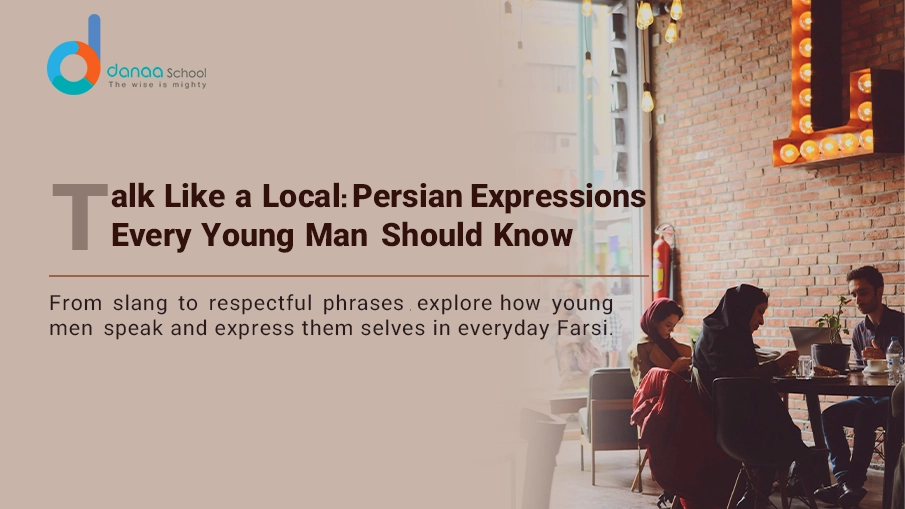
Persian expressions for a young man are commonly used in everyday Farsi to describe personality, intelligence, appearance, and affection. In this guide, you will learn natural Persian expressions for a young man with clear meanings, real-life examples, and cultural explanations.
These expressions are widely used in family conversations, friendships, and romantic relationships. Learning them helps you sound more natural when you learn Farsi and communicate with confidence.
Common Persian Expressions for a Young Man
Below are some of the most common Persian expressions for a young man used in positive and respectful contexts.
- پسر خوب (Pesar Khoob) – Good boy / respectable young man
- جوان خوشفکر (Javān Khosh-Fikr) – Smart and thoughtful young man
- پسر باهوش (Pesar Bāhoosh) – Clever young man
These expressions are often used by parents, teachers, and elders to praise good behavior, intelligence, and responsibility.
Persian Expressions of Affection for a Young Man
Persian language also includes many affectionate and emotional expressions for a young man, especially in close or romantic relationships.
- دلبند (Delband) – Darling, beloved
- عشق من (Eshgh-e Man) – My love
- نفسم (Nafasam) – My breath (very intimate)
These expressions show emotional closeness and are commonly used in Persian romantic and family language.
Persian Compliments for a Young Man
Compliments play an important role in Persian communication. Here are some expressions used to praise a young man’s appearance or character.
- زیبا و جذاب (Zibā va Jazāb) – Handsome and attractive
- شجاع (Shojā‘) – Brave
- درخشان (Darakhsān) – Outstanding, impressive
Using compliments correctly helps you build respectful and positive relationships in Persian culture.
When and How to Use Persian Expressions for a Young Man
Persian expressions for a young man change depending on context, tone, and relationship. Some expressions are suitable for family or formal conversations, while others are reserved for close friendships or romantic situations.
For example, پسر خوب is common in family and educational settings, while عشق من or نفسم should only be used in close emotional relationships.
Understanding context helps learners avoid awkward situations and communicate naturally. Watching Persian films, listening to native speakers, and practicing regularly will strengthen your skills. You can also explore related topics such as Persian expressions with body parts to expand your vocabulary.
FAQs
- What does “پسر خوب” mean? It refers to a well-behaved or respectable young man.
- Are these expressions formal or informal? Some are neutral, while affectionate expressions are informal.
- Can women use these expressions? Yes, many expressions are gender-neutral depending on context.
- How can I practice Persian expressions? By speaking with native speakers and taking structured lessons.
Conclusion
Learning Persian expressions for a young man helps you communicate naturally and understand Persian culture more deeply. These expressions reflect values such as respect, affection, and emotional intelligence.
To improve your Persian step by step, explore structured courses at Danaa School and learn Farsi with expert guidance.