What Is Persian Literature Known For?
Persian literature is one of humanity’s most majestic and enduring cultural achievements. Spanning thousands of years, it embodies a rich blend of poetry, philosophy, mythology, ethics, and spiritual reflection. From epic storytelling to mystical love poetry, Persian literature has shaped cultural identity in Iran and far beyond its borders.
This guide explores the defining characteristics of Persian literature, its historical foundations, major literary figures, dominant themes, and its lasting influence on global culture. It also highlights the role of modern institutions such as Danaa School in preserving and sharing this literary heritage today.
Introduction to Persian Literature
The roots of Persian literature trace back to ancient Persia, where storytelling initially existed as an oral tradition before being recorded in Middle Persian (Pahlavi). Over centuries, Persian literature evolved alongside political, social, and cultural transformations, becoming a mirror of the Persian-speaking world’s collective soul.
More than a body of written texts, Persian literature reflects humanity’s deepest questions about existence, morality, love, faith, and identity.
The Epic Foundation: Ferdowsi’s Shahnameh
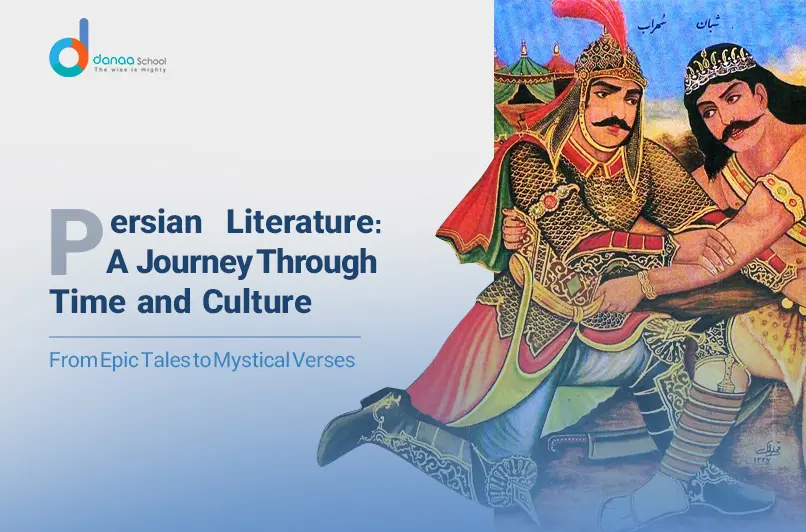
Shahnameh (The Book of Kings), composed around 1000 CE by Ferdowsi, stands as the cornerstone of Persian literature. This monumental epic recounts Iran’s mythical and historical past, from the creation of the world to the Arab conquest.
Beyond its literary brilliance, the Shahnameh preserved the Persian language during a time when Arabic dominated scholarly and literary life. Its heroes, kings, and moral struggles continue to shape Persian cultural identity.
The Role of Shahnameh in Cultural Preservation
Ferdowsi’s decision to write the Shahnameh in Persian ensured the survival of the language and its literary tradition. At a time of cultural vulnerability, the epic became a symbol of resilience, unity, and historical continuity for Persian-speaking communities.
The Lyrical Beauty of Persian Poetry
Persian literature is especially renowned for its poetry, celebrated for emotional depth, musical language, and symbolic imagery. Persian poetic forms include the ghazal, qasida, masnavi, and rubaiyat, each serving different expressive purposes.
Through these forms, poets explored love, loss, beauty, morality, and the mysteries of existence, often blending earthly emotions with spiritual insight.
Sufism and Mystical Expression
Sufism profoundly shaped Persian poetry. Poets such as Rumi, Hafez, and Attar used metaphor and symbolism to describe the soul’s longing for divine union. Their works transcend religion, offering universal messages of love, transformation, and inner awakening.
Philosophical and Ethical Depth
Persian literature is deeply philosophical, engaging with questions of fate, free will, justice, happiness, and moral responsibility. Rather than abstract theory, these ideas are often conveyed through stories, parables, and poetic reflection.
Saadi’s Gulistan and Bostan
Saadi’s Gulistan and Bostan exemplify Persian ethical literature. Combining prose and verse, these works present timeless wisdom on humility, compassion, leadership, and human behavior. Their relevance across centuries highlights the universal appeal of Persian moral thought.
The Global Influence of Persian Literature
Persian literature has significantly influenced global culture. Through translation and scholarly exchange, Persian poetry and philosophy shaped literary movements in Europe, South Asia, and the Islamic world.
Themes of love, mysticism, existential inquiry, and ethical reflection resonate universally, allowing Persian literature to transcend cultural boundaries.
Persian Literature and the West
Western writers and thinkers have long been inspired by Persian poets. Translations of Rumi, Hafez, and Khayyam introduced new spiritual and poetic perspectives, fostering cross-cultural dialogue and mutual enrichment.
Contemporary Persian Literature
Today, Persian literature remains a living tradition. Writers inside Iran and across the diaspora continue to engage with modern themes such as identity, migration, freedom, and cultural memory while drawing inspiration from classical foundations.
The Role of the Persian Diaspora
For Persian-speaking communities abroad, literature plays a crucial role in preserving language and identity. Diaspora writers use literature to navigate exile, belonging, and cultural continuity, ensuring the tradition remains vibrant for future generations.
Why Learn Persian Literature with Danaa School?
Danaa School offers a structured and accessible approach to exploring Persian literature. Through expert-led courses, workshops, and Persian language programs, learners gain both literary insight and cultural understanding.
Bridging Cultures Through Literature
By teaching Persian literature in a global context, Danaa School helps bridge cultures and foster appreciation for one of the world’s richest literary traditions. Its mission emphasizes cultural preservation, dialogue, and meaningful learning in an increasingly interconnected world.
FAQ
What Are the Main Literary Forms in Persian Literature?
Persian literature is characterized by diverse literary forms, each offering unique insights into the human experience. The epic narratives of the Shahnameh, the lyrical beauty of ghazals, the philosophical depth of masnavis, and the poignant simplicity of quatrains (rubaiyat) are just a few examples of the forms that have been developed and perfected over centuries. These forms have allowed Persian poets and writers to explore various themes, from the lofty realms of divine love and mysticism to the grounded realities of everyday life and social commentary.
How Can One Access Persian Literature Today?
With the advent of digital technology and the efforts of literary scholars and translators, Persian literature is more accessible today than ever before. A wealth of Persian literary works is available in translation, allowing readers worldwide to explore this rich tradition. Online platforms, digital libraries, and academic institutions provide valuable resources for those interested in delving into Persian poetry, prose, and philosophical texts.
How Does Persian Literature Reflect the Society and Culture of Its Time?
Persian literature serves as a mirror reflecting the Persian-speaking world’s societal values, cultural norms, and historical events through the ages. From the grand epic narratives of the Shahnameh, which immortalize the heroic ideals and moral virtues of ancient Persia, to the mystical poetry of the Sufi masters, which reveals the spiritual yearnings and philosophical inquiries of medieval Islamic Iran, Persian literature encapsulates the essence of its societal context.
What Role Do Women Play in Persian Literature?
Women have played a significant and evolving role in Persian literature as creators and subjects. In classical Persian literature, women are often idealized figures of beauty and love, serving as muses for poets to explore themes of desire and devotion. However, this traditional portrayal is just one facet of their presence in Persian literary tradition. Historical records and literary works evidence the contributions of female poets and writers, such as Rabia Balkhi, considered one of the first female Persian poets, and Mahsati Ganjavi, a 12th-century poet known for her rubaiyat.
How Has Persian Literature Adapted to the Digital Age?
Persian literature has shown remarkable adaptability to the digital age, embracing new platforms and technologies to reach wider audiences. The internet and digital publishing have revolutionized the way Persian literary works are disseminated and consumed, making them more accessible to readers worldwide. Websites, online libraries, and social media platforms now host vast collections of Persian poetry and prose, both classical and contemporary, facilitating interactions between authors, poets, and their global audience.
What Impact Has Translation Had on Persian Literature?
Translation has played a pivotal role in bringing Persian literature to a global audience, allowing its themes, aesthetics, and philosophical insights to transcend linguistic and cultural barriers. Translating Persian literary works into various languages has facilitated cross-cultural dialogues, introducing readers worldwide to the depth and richness of Persian poetry, prose, and philosophical texts.
Can Persian Literature Offer Insights into Today's Global Issues?
With its rich historical depth and thematic diversity, Persian literature offers timeless insights into many of today’s global issues, including themes of justice, morality, the search for meaning, and the human condition. The ethical quandaries, existential struggles, and aspirations for a better world that permeate Persian literature resonate deeply with contemporary concerns such as human rights, social justice, and the quest for peace and understanding across cultures.
Conclusion
So, what is Persian Literature known for? With its intricate tapestry of poetic expression, philosophical depth, and cultural reflection, Persian literature remains a vibrant and vital part of the world’s literary heritage. Through its exploration of universal themes of love, loss, joy, and the quest for meaning, it continues to speak to readers across time and space. Institutions like Danaa School are essential in preserving and promoting this rich tradition, offering pathways for exploration and understanding that bridge cultural divides and enrich our collective human experience.
With our expertly curated courses and resources, explore the poetic landscapes, philosophical inquiries, and cultural depths that define Persian literature. Discover the timeless wisdom and aesthetic beauty that have captivated readers and scholars for centuries. Enroll today and take the first step towards a deeper understanding and appreciation of one of the world’s most enduring literary heritages.